
Author: Steve Bavoysi
Yoga for Mental Health
Founder and CEO of Grounded_by_yoga
Come and join me on social media! Are you curious about what is Ahimsa and how its meaning can guide us toward a kinder, more balanced life? Ahimsa—non-violence in thought, word, and action—is a powerful reminder to stay compassionate with ourselves and others. In a fast-paced world, living with non-violence helps us stay grounded, connected, and truly thrive. Share the journey and let’s grow together!!
Before We Begin: The Spirit of Non-Violence
Maybe you’ve heard the word Ahimsa in a yoga class, or perhaps you’re a yoga teacher wanting to deepen your understanding of this principle. Or maybe you’re simply curious why it’s considered the very foundation of yoga.

We often think of yoga as physical postures, especially due to the image that social media reflect about yoga but its roots go far deeper. Ahimsa, often translated as non-violence, is the first principle of the Yamas, the ethical guidelines in yoga philosophy. It’s not just about avoiding harm physically; it’s about cultivating compassion, mindfulness, and kindness in every moment and aspect of life.
Before we start, if you’re not familiar with the Yamas and Niyamas, I highly recommend checking out my post on them here to give you a better understanding of what is coming next: The Yamas & Niyamas Ancient Wisdom For Modern Stress
Reflecting on and understanding the Ahimsa meaning can transform how we treat ourselves, how we interact with others, and how we move through society.
In this post, we’ll define what Ahimsa is, explore why it matters for mental health and well-being, and share practical ways to apply it in daily life.
What Is Ahimsa?
Ahimsa is a Sanskrit word meaning “non-violence” or “non-harming,” and it is the first and most fundamental of the Yamas, the ethical guidelines that form the foundation of a mindful life. But Ahimsa goes far beyond a simple definition—it’s a way of living with awareness, compassion, and intention.
At its core, Ahimsa is about more than avoiding physical harm. It asks us to notice the subtle ways we create suffering: in our thoughts, which can be self-critical or judgmental; in our words, which can wound unintentionally; and in our actions, which ripple out to affect others, animals, and the environment. The Ahimsa meaning is an invitation to cultivate kindness toward ourselves and others, recognizing that self-criticism is a form of violence just as real as hurting someone else.
Ahimsa is also a conscious choice. It is active, not passive—requiring intentional love, respect, and awareness in everything we do. This might mean pausing before reacting in anger, speaking truthfully yet kindly, choosing nourishing foods, or supporting sustainable practices that protect the planet. Each small act of awareness—whether toward ourselves, others, or the environment—builds empathy and strengthens connection.
Ultimately, Ahimsa is a lens through which we see the world—and the world reflects back how we see it. Our well-being is deeply linked to the well-being of those around us. Every act of non-violence, no matter how small, creates space for peace, understanding, and connection. Living Ahimsa is a daily practice, extending far beyond the yoga mat. It is a continual invitation to align our inner intentions with our outward actions, fostering harmony within ourselves and with the world.
Why Is Ahimsa Important for our mental health?
So why is Ahimsa so important, especially today?
Violence, in all its forms, whether subtle or obvious, creates suffering. When we criticize ourselves harshly, overwork until burnout, or neglect our basic needs, that’s a form of violence against ourselves. When we use hurtful words or act out of anger toward others, that creates emotional wounds. And when we consume without awareness, ignoring our impact on the planet, future generations pay the price.
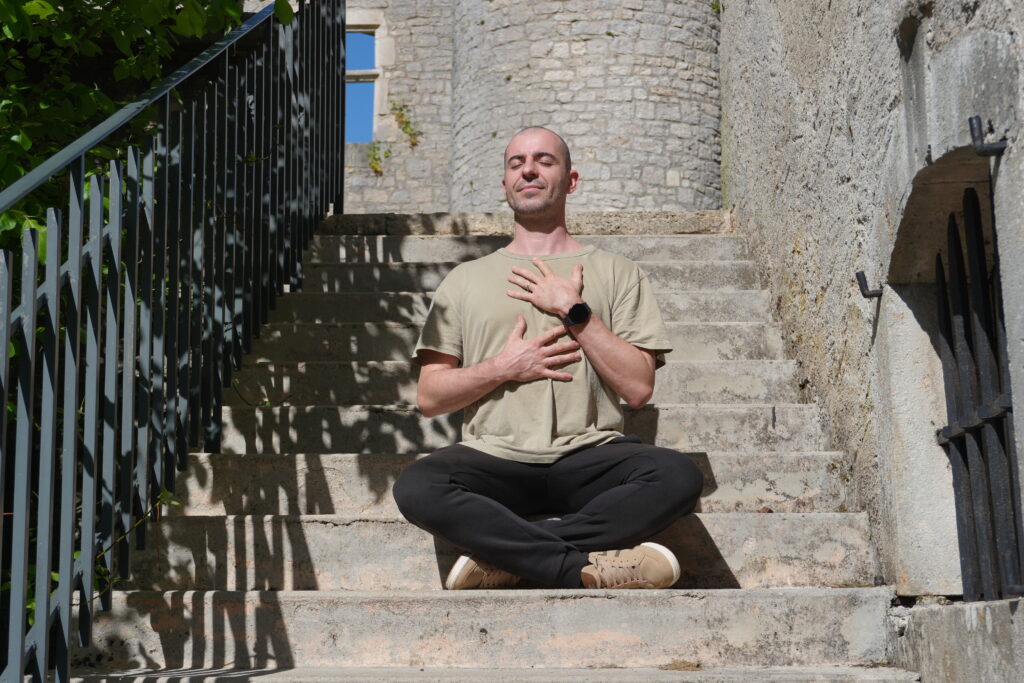
Research shows that compassion and self-kindness improve mental health, reducing stress, anxiety, and depression while increasing resilience and happiness. Practicing Ahimsa isn’t just about morality: it’s essential for well-being, balance, and healthier communities.
Practicing Ahimsa in Daily Life
Ahimsa is not a lofty idea; it’s something we can practice every single day, without having to sweat on the mat. Here’s how the principle of non-violence shows up in different areas of life:
1. Kindness Toward Ourselves
Often, the harshest violence we experience comes from within. Negative self-talk, perfectionism, and ignoring our limits harm our mental health and well-being without realizing it.
Ahimsa asks us to pay attention and soften that voice, offering ourselves compassion. Instead of saying, “I failed again,” we can reframe: “I’m learning and doing my best.” or another example: “I have to do…” reframing this to “I get the chance to do…” Choosing rest when needed is also an act of non-violence.
2. Non-Violence Toward Others
Ahimsa reminds us that our words and actions matter. Practicing non-violence means speaking honestly without cruelty, listening with empathy, and remembering that everyone is fighting unseen battles.
It’s about choosing patience over anger, forgiveness over resentment, and respect over judgment. Non-violence in relationships creates trust and deeper connections.
3. Our Relationship With Food and Drink
The Ahimsa meaning extends to the way we nourish our bodies, reminding us that non-violence includes the care we give ourselves. Eating mindfully is not just about nutrition but it’s about awareness, intention, and respect for the life within us. Before each meal or drink, we can pause and ask: Does this choice support my body and mind, or does it cause harm?
For some, practicing Ahimsa in this way might mean choosing more plant-based meals, reducing alcohol, or avoiding foods that deplete energy or contribute to suffering elsewhere, such as through unsustainable or unethical production. For others, it might be as simple as slowing down to savor each bite, being present during the meals and not watching TV or smartphone, noticing flavors and textures, and truly honoring the nourishment we are giving ourselves.
Ahimsa encourages us to shift from eating as a way to distract, numb, or cope, to eating as an act of kindness and gratitude toward our bodies. Each conscious choice becomes a form of self-compassion; a small yet profound act of non-violence. Over time, this practice not only supports physical health but also cultivates a sense of presence, balance, and respect for all life.
4. Ahimsa in Society
Our actions ripple outward. Ahimsa invites us to look at how our choices affect communities and the environment. Do we support ethical, sustainable practices? Do we contribute to peace or division in how we interact online or in person?
Even small acts of awareness—such as buying locally, reducing waste, or choosing kind words—are meaningful ways to practice Ahimsa in society.
5. Living With Compassion and Awareness
At its heart, Ahimsa is about cultivating genuine compassion. It begins with noticing suffering—not just in others, but in ourselves, and recognizing the subtle ways our thoughts, words, and actions can either contribute to that suffering or help alleviate it. True Ahimsa asks us to slow down, creating a space of awareness before we react, and to ask ourselves: “Will this bring harm, or will it foster healing?”
This pause, however brief, allows us to act from intention rather than impulse. It transforms our relationships, enabling us to communicate more thoughtfully, respond with patience, and treat others—and ourselves—with kindness. Over time, living with this compassionate awareness strengthens resilience, deepens connections, and nurtures a more peaceful, grounded state of mind.
Ahimsa reminds us that even small choices ripple outward: a gentle word, a mindful gesture, or an act of understanding can shift the energy in a room, a community, or even our own inner world. In this way, non-violence is not passive—it is an active, conscious practice that shapes the quality of our lives and the lives of those around us.
Tips for Practicing Ahimsa
If you’re wondering how to start living with non-violence, here are five practical ways to bring Ahimsa into your daily life:
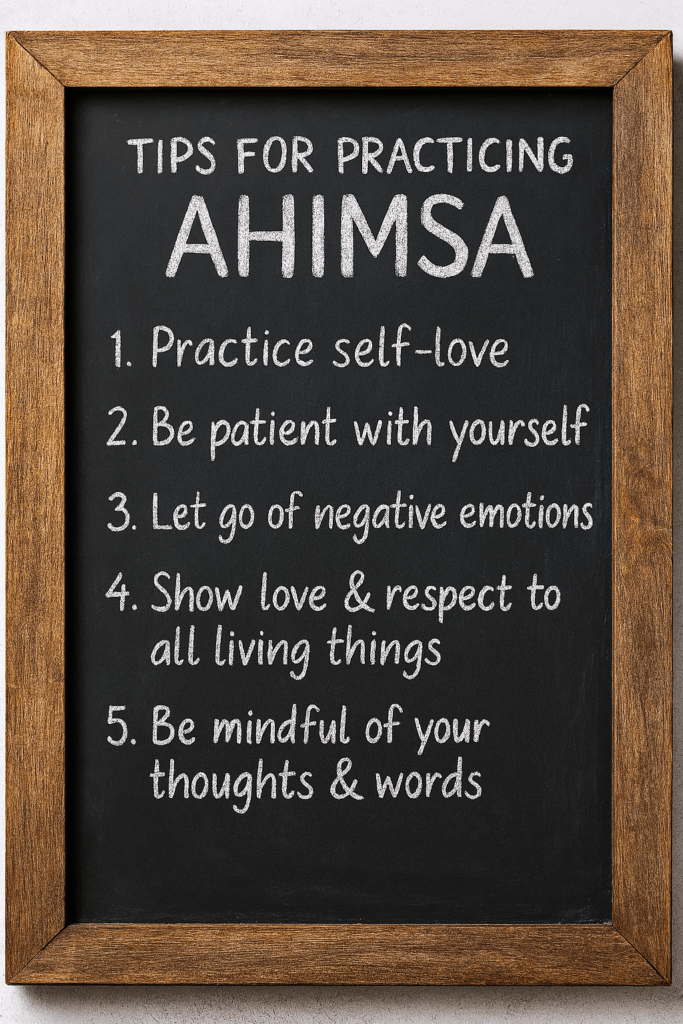
1. Pause before reacting.
Our first response to challenges is often impulsive, driven by stress or habit. Ahimsa teaches us to create a small space between stimulus and response. Taking a breath before speaking or acting allows us to respond thoughtfully rather than react with harm. Even a few seconds of awareness can prevent words or actions we might later regret.
2. Be gentle with yourself.
Self-criticism is a common form of violence we inflict on ourselves. Ahimsa reminds us that harsh judgment doesn’t motivate growth—it creates suffering. Treat yourself as you would a dear friend: honor your efforts, accept mistakes as part of being human, and replace judgment with kindness. Self-compassion strengthens resilience and extends empathy outward.
3. Choose nourishing habits.
Ahimsa includes how we care for our bodies and minds. Eating mindfully, resting when needed, and engaging in activities that energize rather than deplete us are all acts of non-violence. Every conscious choice to nourish yourself builds a foundation for clarity, compassion, and well-being.
4. Use your energy mindfully.
Time, attention, and energy are limited resources. Ahimsa encourages awareness of how we invest them. Are we engaging in activities that uplift and inspire, or are we draining ourselves with distractions? Aligning energy with intention helps cultivate a purposeful and balanced life.
5. Let go of what no longer serves you.
Habits, clutter, or thoughts that cause stress create unnecessary tension. Practicing Ahimsa means releasing these burdens, creating space for peace, clarity, and growth. Letting go is an act of self-respect that frees us to act with compassion toward ourselves and others.
Bringing Ahimsa Into Your Life
So, what is Ahimsa? It’s the practice of living with non-violence in thought, word, and action. The Ahimsa meaning reminds us that yoga is more than poses; it’s a philosophy that teaches us to live with compassion and awareness.
By practicing Ahimsa toward ourselves, others, and the world, we don’t just reduce harm; we create space for healing, peace, and fulfillment.
Remember: taking care of your mental health and practicing kindness is not a sign of weakness; it’s a sign of strength, of being wise and it is the real meaning of being human.
Start Practicing Non-Violence Today
If this reflection on Ahimsa resonates with you, I invite you to download my free 3-day video series, “The Calm Within”A Gentle 3-Day Plan designed to help you cultivate mindfulness, compassion, and inner peace in your daily life.
👉 Click Here To Learn More About The Calm Within
Thank you for being here and taking a moment to pause.
Feel free to explore the links below for more inspirational and educational content. If it resonates with you, you’re also welcome to sign up for my weekly newsletter to receive fresh insights and guidance every week.
I hope something in these words gave you a reason to breathe a little deeper or feel a little less alone.
Your presence in this space means more than you know.
With warmth,
Steve Bavoysi
Founder & CEO of Grounded_by_yoga
Come and join me on social media! Share! And thrive!

Reset Your Mind & Body: 7-Day Stress Detox
Designed for busy minds, this 7-day journey offers short, soothing yoga and breathwork practices to help you break the cycle of stress and overwhelm. With practices of under 15 minutes a day, you’ll release tension, soothe your nervous system, and gently reconnect with what truly matters: “Yourself”. No pressure. No judgment. Just a gentle return to balance, clarity, and calm.
Last updated Feb 15th, 2026