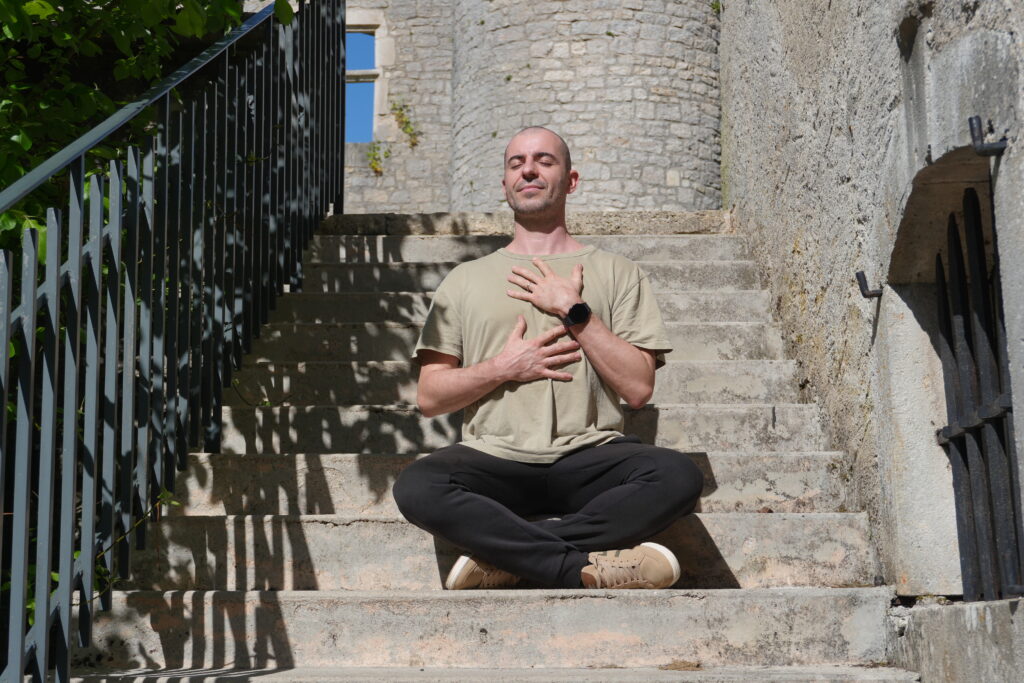

Author: Steve Bavoysi
Yoga for Mental Health
Founder and CEO of Grounded_by_yoga
Come and join me on social media! Share the journey and let’s grow together!!
Maybe you’ve heard the word Satya in a yoga class, or perhaps you’re curious about what is Satya and why it’s considered one of the most important principles in yoga philosophy.
While yoga is often seen as a series of physical postures, its true purpose goes far beyond the mat. Satya, meaning “truth” or “truthfulness,” is the second Yama—one of yoga’s ethical foundations—and it invites us to live with honesty, integrity, and authenticity.
If you’re new to the Yamas and Niyamas, I recommend reading my post The Yamas & Niyamas: Ancient Wisdom for Modern Stress to understand the broader context of these timeless teachings.
Reflecting on the meaning of Satya can transform the way we communicate, make choices, and connect—with ourselves, others, and the world around us.
In this article, we’ll explore what Satya is, what the meaning of Satya truly represents, why it matters for mental health, and how you can practice it in your daily life.
What Is the Meaning of Satya?
So, what is Satya exactly?
In Sanskrit, Satya comes from the root word Sat, meaning “truth” or “that which is real.” It’s often translated as truthfulness, but its deeper meaning points to living in harmony with what is real: both within and around us.
The meaning of Satya goes far beyond simply telling the truth. It’s about aligning our thoughts, words, and actions with authenticity. It means speaking honestly, acting with integrity, and living in a way that reflects our true values.
Importantly, Satya is closely connected to Ahimsa (non-violence), the first Yama. The ancient yogic texts remind us that truth must always be expressed with kindness: truth should never be used to cause harm.
Living Satya is not about harsh honesty or rigid ideals. It’s about expressing truth gently and mindfully, creating more harmony rather than conflict.
When we live in alignment with truth, we feel lighter, more grounded, and at peace with ourselves.
Why Is Satya Important for our Mental Health and Well-Being?
In today’s world, where appearance often takes precedence over authenticity, the meaning of Satya feels more relevant than ever. Many of us hide our real feelings behind a smile, say “yes” when we mean “no,” or suppress our needs to fit in. Over time, this disconnection creates inner stress and emotional fatigue.
Practicing Satya helps us reconnect with our authentic selves. When our actions align with our truth, we experience less internal conflict and more emotional balance.
Research consistently shows that authenticity and self-awareness improve mental health, lower stress and anxiety, and build stronger, more trusting relationships.
When we honor truth, with compassion, we nurture a sense of freedom and clarity that supports lasting well-being and guide us gently towards the ultimate goal: HAPPINESS.

Practicing Satya in Daily Life
Living truthfully doesn’t mean striving for perfection, it means showing up with honesty and awareness in small, everyday moments. Here’s how the principle of Satya can guide us through different aspects of life:
1. Being Honest with Ourselves
The first step in understanding what is Satya is recognizing that truth begins within. We often convince ourselves we’re fine when we’re not or push through exhaustion to meet unrealistic expectations coming from ourselves or others.
Practicing Satya means tuning in and admitting how we truly feel. Sometimes our truth is uncomfortable, YES, but acknowledging it is the beginning of healing.
When we’re honest with ourselves, we make space for authenticity and self-compassion to grow and sustain.
2. Speaking Truth with Kindness
Truthful communication is at the heart of the meaning of Satya. Yet Satya doesn’t give us permission to speak without sensitivity. It invites us to express truth in a way that honors both ourselves and others.
Before speaking, pause and ask:
Is it true? Is it kind? Is it necessary?
This practice brings mindfulness to our words, allowing truth to become a bridge for connection instead of division.
3. Living Authentically
Practicing Satya also means aligning our outer life with our inner truth. When our actions reflect our values, we live with integrity and peace. When they don’t, we feel tension, stress and disconnected.
Living authentically may mean choosing rest instead of constant busyness, saying no to what doesn’t serve you, or pursuing paths that truly resonate with your heart.
This alignment between truth and action builds confidence, clarity, and inner stability.
4. Truthfulness in Relationships
Honesty strengthens relationships built on mutual respect and trust. Living with Satya may mean having difficult conversations, setting boundaries, or admitting when we’re wrong.
While uncomfortable at times, this kind of honesty deepens intimacy and helps relationships flourish in authenticity, not perfection.
5. Truth in Thoughts and Perception
Our thoughts shape how we experience the world, but not all thoughts are true. The mind often distorts reality with self-criticism or fear. Practicing Satya means questioning these thoughts and reconnecting with what’s real.
Is it really true that you’re “not enough”? Or is that just an old story the mind keeps repeating?
Returning to truth quiets mental noise and fosters peace.
Five Practical Ways to Practice Satya
Ready to bring the meaning of Satya into your daily life? Here are five simple ways to start:
- Pause before speaking.
Take a breath. Make sure your words are both truthful and kind. - Notice when you’re out of alignment.
Pay attention to times when your actions don’t match your values. Awareness is the first step toward living your truth. - Journal your truth.
Writing helps you explore what’s real for you. Allow your thoughts and emotions to flow freely without judgment. - Speak from compassion, not ego.
Truth delivered with softness builds connection; truth delivered with pride can create harm and disconnection. - Honor your boundaries.
Saying “no” can be an act of truthfulness and self-respect. Protecting your energy is part of living Satya.
Bringing Satya Into Your Life
So, what is Satya and why does it matter? Satya is the practice of living truthfully, in thought, word, and action. The meaning of Satya reminds us that yoga is not just about physical poses; it’s a philosophy that helps us live in harmony with ourselves and the world.
When we live in truth, we stop hiding, we stop pretending, and we start living with authenticity and peace.
Remember: living your truth doesn’t mean being perfect, it means being real. When truth is expressed with compassion, it becomes a powerful force for healing, growth, and connection.
Satya is not something we master once; it’s a lifelong practice, day after day, of returning to what’s real, moment by moment. And that’s where true freedom begins.
Stay Connected on Your Journey Toward Truth and Inner Peace
If this reflection on Satya resonated with you, I’d love to continue sharing mindful insights, yoga practices, and reflections that nurture authenticity, calm, and emotional balance.
✨ Join my newsletter to receive gentle reminders to slow down, reconnect with yourself, and live more aligned with your truth: both on and off the mat.
Each email is crafted with intention: no noise, no overwhelm, just real guidance for a more centered and peaceful life.
Thank you for being here and taking a moment to pause.
Feel free to explore the links below for more inspirational and educational content.
I hope something in these words gave you a reason to breathe a little deeper or feel a little less alone.
Your presence in this space means more than you know.
With warmth,
Steve Bavoysi
Founder & CEO of Grounded_by_yoga
Come and join me on social media! Share! And thrive!

Find your Calm: The Path to Serenity
In this 10-day yoga program, you will dive deep into the ancient wisdom of the yamas and niyamas — the ethical and moral foundations of yoga — and discover how they can be powerful tools for managing stress and anxiety in your daily life. Through these lessons, you will explore each of the five yamas (non-harming, truthfulness, non-stealing, moderation, and non-possessiveness) and five niyamas (purity, contentment, self-discipline, self-study, and surrender) in a way that is practical, relatable, and applicable to modern life. Each session will combine gentle yoga practices, guided meditations, and reflective exercises, allowing you to experience the calming effects of these principles physically, mentally, and emotionally. By understanding and reflecting on these core tenets, you will cultivate greater self-awareness and compassion, leading to a deeper sense of inner peace and balance.
Last updated Feb 15th, 2026