Author: Steve Bavoysi
Yoga for Mental Health
Founder & CEO of Grounded_by_yoga
Hey there! I’m Steve! And through my teaching, I help people who rely on unhealthy coping mechanisms and often feel stressed, overwhelmed, or disconnected from themselves. Using yoga, philosophy, and mindfulness, I guide them to slow down and regulate their nervous system naturally. If this resonates with you, you’re welcome to follow me on social media for gentle guidance, support, and practical tools to bring more calm and balance into your day.
Table of contents
Let set the Why You should stretch your Body first
After a full day sitting at your desk, your body doesn’t feel like your own anymore. You can probably feel your hips tight, your shoulders ache, and even when work is over, the tension stays with you.
And sitting for hours behind a computer doesn’t just affect your posture. It keeps your mind in a constant low-grade stress state. Your sensory input are constantly running the show, that’s why you can feel so exhausted even if you stayed sitting all day. It creates mental fatigue.
Doing yoga after sitting all day can be so powerful to release that mental load, and gently stretching the areas of the body that hold accumulated tension, gives you the opportunity to reconnect with your breath. This not only helps release physical stress, but also supports your mental well-being by calming the nervous system and bringing your mind back to the present moment.
What is Happening to our body when we sit All day Long?
When you sit all day, your body gradually adapts to that position in ways that create tension, weakness, and stress. Your hip flexors shorten and tighten, which can pull on your lower back and cause stiffness and discomfort, while your glutes become weak and inactive because they’re no longer supporting your posture.
At the same time, your spine tends to round forward, leading to collapsed shoulders, neck tension, and increased pressure on your back. This posture also restricts your breathing overtime, making it shallower, which signals your nervous system to stay in a low-level stress state instead of relaxing. Circulation slows down, especially in your legs, which can leave you feeling heavy, fatigued, and drained by the end of the day.
Over time, this combination of physical tension, shallow breathing, and nervous system activation can leave you feeling both physically exhausted and mentally unable to switch off, which is why gentle movement and intentional breathing are essential to help your body release tension and return to a state of balance.
5 Yoga Poses After Sitting At A Desk All Day
These gentle poses help undo the physical and nervous system tension created by hours at a desk. Practice them slowly, focusing on your breath, and allow your body to shift out of “work mode.”
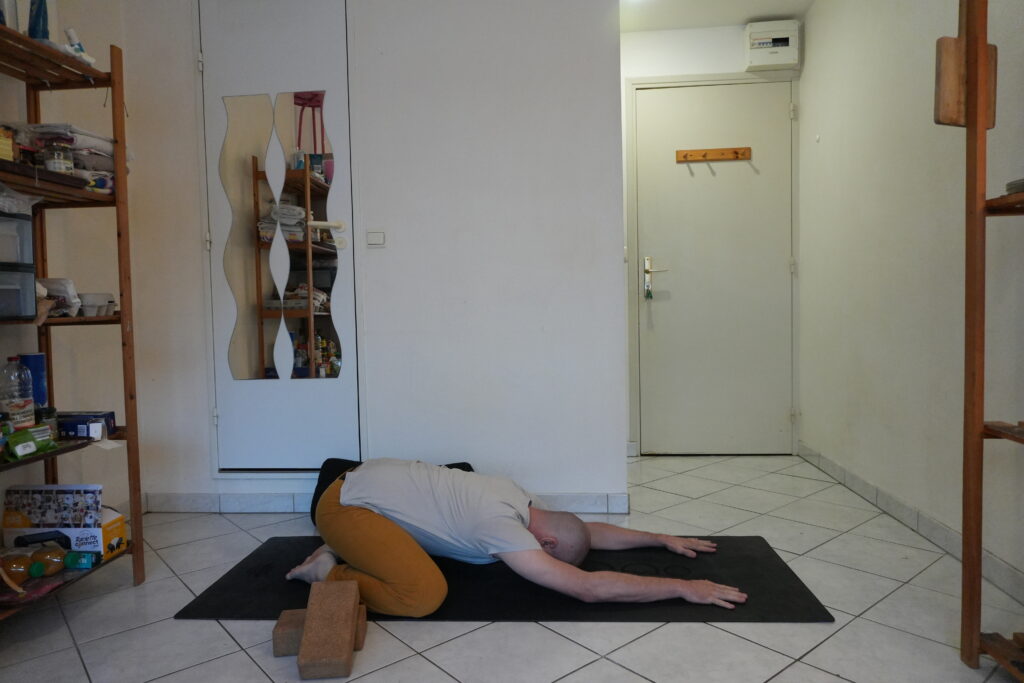
1: Child Pose also called in Sanskrit “Balasana”
Child’s Pose, or Balasana, is one of the most effective positions to release lower back tension and calm an overstimulated nervous system. After sitting all day, the muscles along your spine and hips become compressed and fatigued. This pose gently stretches those areas while signaling safety to your body, helping you shift into a state of relaxation.
Benefits: Releases lower back tension, relaxes shoulders, and calms the mind.
Below is an option of child pose knees wild (best for those suffering from Herniated disc) because it avoid spinal flexion. Here we also have an extension of the arms in front which help release the tension in the shoulders.
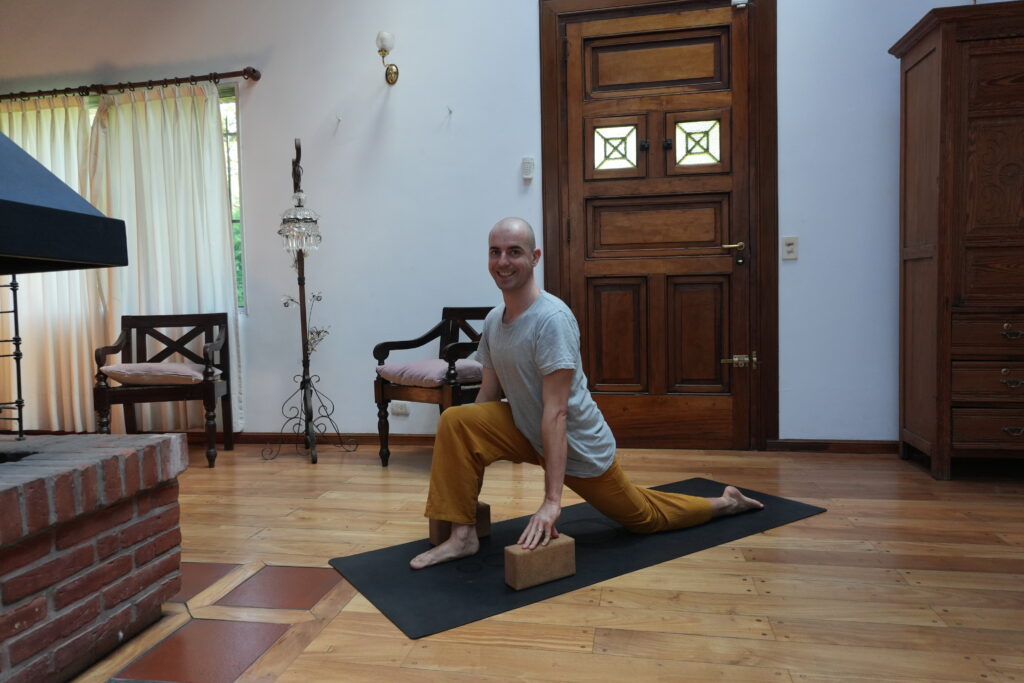
2: Low Lunge (Hip Flexor Stretch)/ in Sanskrit “Anjaneyasana”
Low Lunge, or Anjaneyasana, directly targets the hip flexors, which become tight and shortened from prolonged sitting. Tight hip flexors can pull on the pelvis and contribute to lower back discomfort. This pose restores length and balance to the front of the hips and helps improve posture.
Benefits: Releases tight hips, reduces lower back strain, and improves posture.
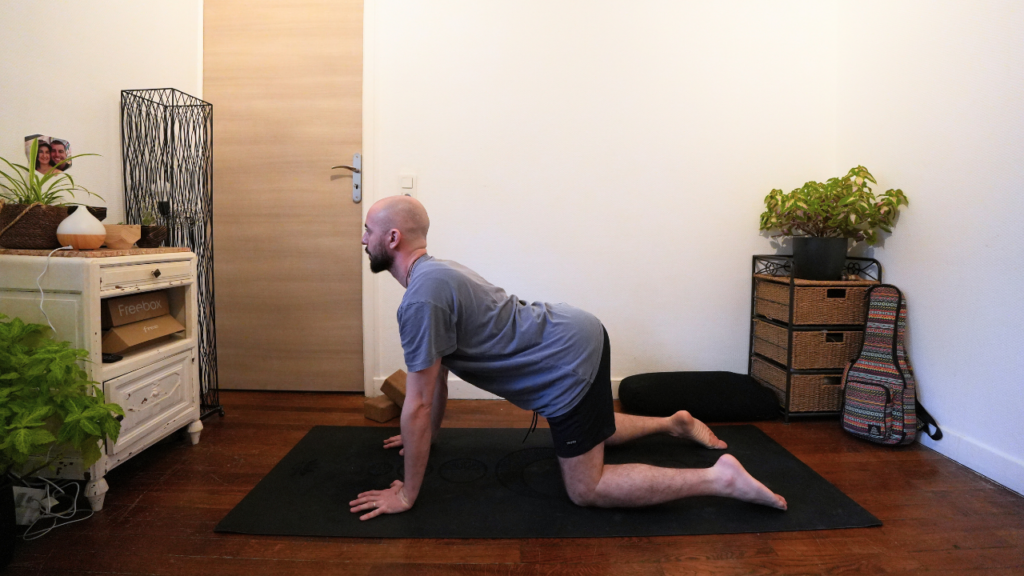
3: Cat–Cow or in Sanskrit “Bidalasana”
Cat–Cow is a gentle spinal movement starting from a kneeling position that restores mobility and releases stiffness caused by prolonged sitting. Sitting keeps the spine in a fixed position for hours, reducing circulation and increasing tension. This movement reintroduces fluidity and helps reconnect you with your breath.
Benefits: Relieves spinal tension, improves mobility, and releases back and neck stiffness.
4: Seated Forward Fold (paschimottanasana)
Seated Forward Fold, or Paschimottanasana, stretches the entire back of the body, including the spine, shoulders, and hamstrings. It helps release accumulated tension while encouraging the nervous system to slow down. This pose is especially helpful at the end of the day when your mind feels busy.
Benefits: Releases back tension, calms the nervous system, and quiets the mind.
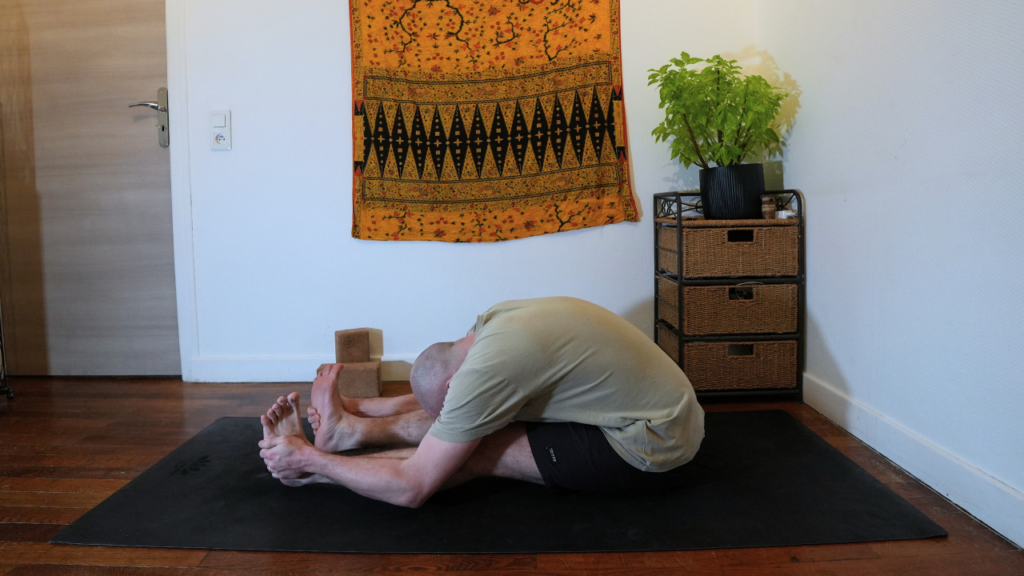
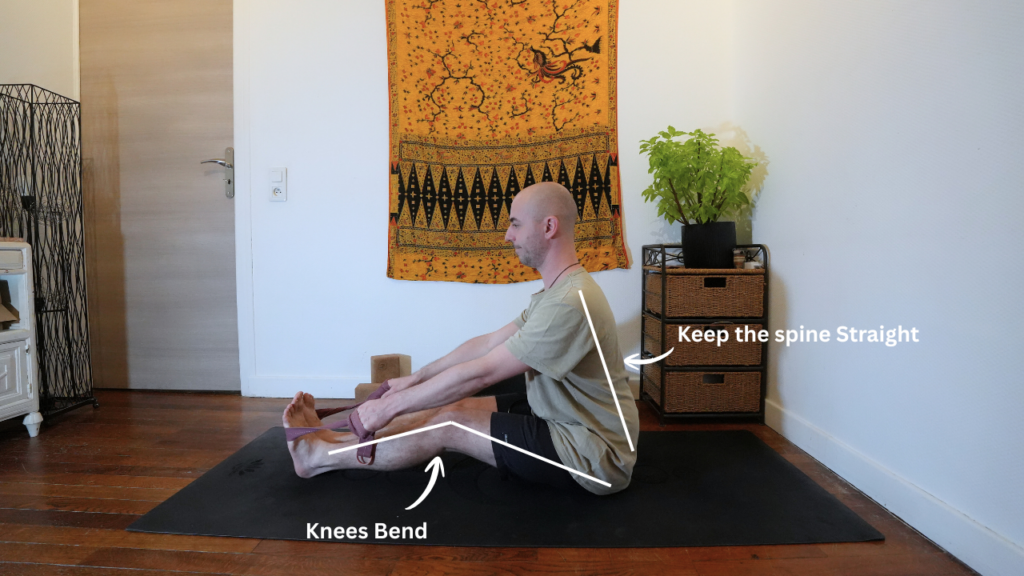
Below is another option for those with tight hamstrings or spine injury such a disc bulge
5: Legs up the wall (here supported by a bolster) also known in Sanskrit as “Viparita Karani”
Legs Up the Wall, or Viparita Karani, is one of the most powerful poses for relieving fatigue and resetting your nervous system. Sitting all day reduces circulation and creates heaviness in the legs. This gentle inversion improves blood flow, reduces swelling, and deeply relaxes the body.
Benefits: Reduces fatigue, improves circulation, and promotes deep relaxation.
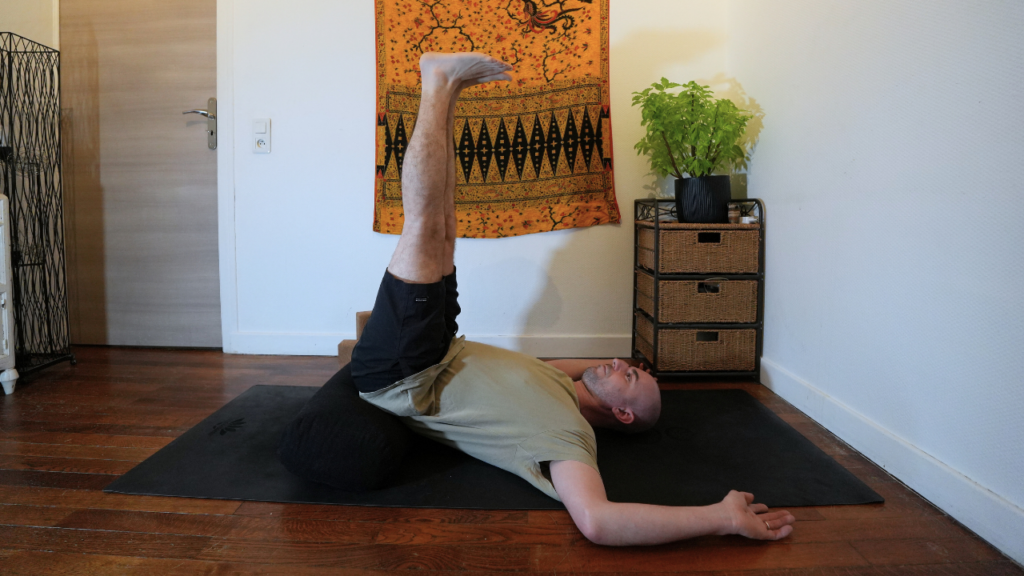
If you want to try this simple but grounding yoga pose after sitting at a desk all day, check out the video linked below to access the session combined with a breathing exercise on my YouTube Channel:
Thank you for being here, for reading, and for taking a moment to pause.
Your presence in this space truly matters.
If this post inspired you, feel free to explore more resources below.
And you’re always welcome to join my weekly newsletter for more reflections on Yoga For Professionals & Mental health, and mindful guidance.
May today bring you a bit more clarity, space, and ease.
With Love,
Steve Bavoysi
Founder & CEO of Grounded_by_yoga
Come and join me on social media! Share! And thrive!

Calm on demand (video Library)
This video library is here to support you whenever you need to tune in. Whether you’re feeling overwhelmed, caught in stress cycles, or disconnected from yourself, these practices will help you reset your nervous system, release emotional heaviness, cultivate deep relaxation, and reconnect with your inner self. From Vinyasa to Gentle Hatha and Yin Yoga, you’ll find slow, intentional movement designed to release tension and soothe your nervous system. The library also includes breathwork and meditation practices—powerful tools to calm your mind and regulate emotions—along with short stress-relief sequences created for those moments when time is limited but stress is high. For deeper healing, there are longer sessions focused on emotional release, nervous system regulation, and deep rest. Everyone is welcome, no matter where you are on your journey. More than just movement, this library is about helping you step out of survival mode and into a life of clarity, ease, and empowerment.
Last updated Feb 15th, 2026