Estimated reading time: 7 minutes
Author: Steve Bavoysi
Yoga for Mental Health
Founder & CEO of Grounded_by_yoga
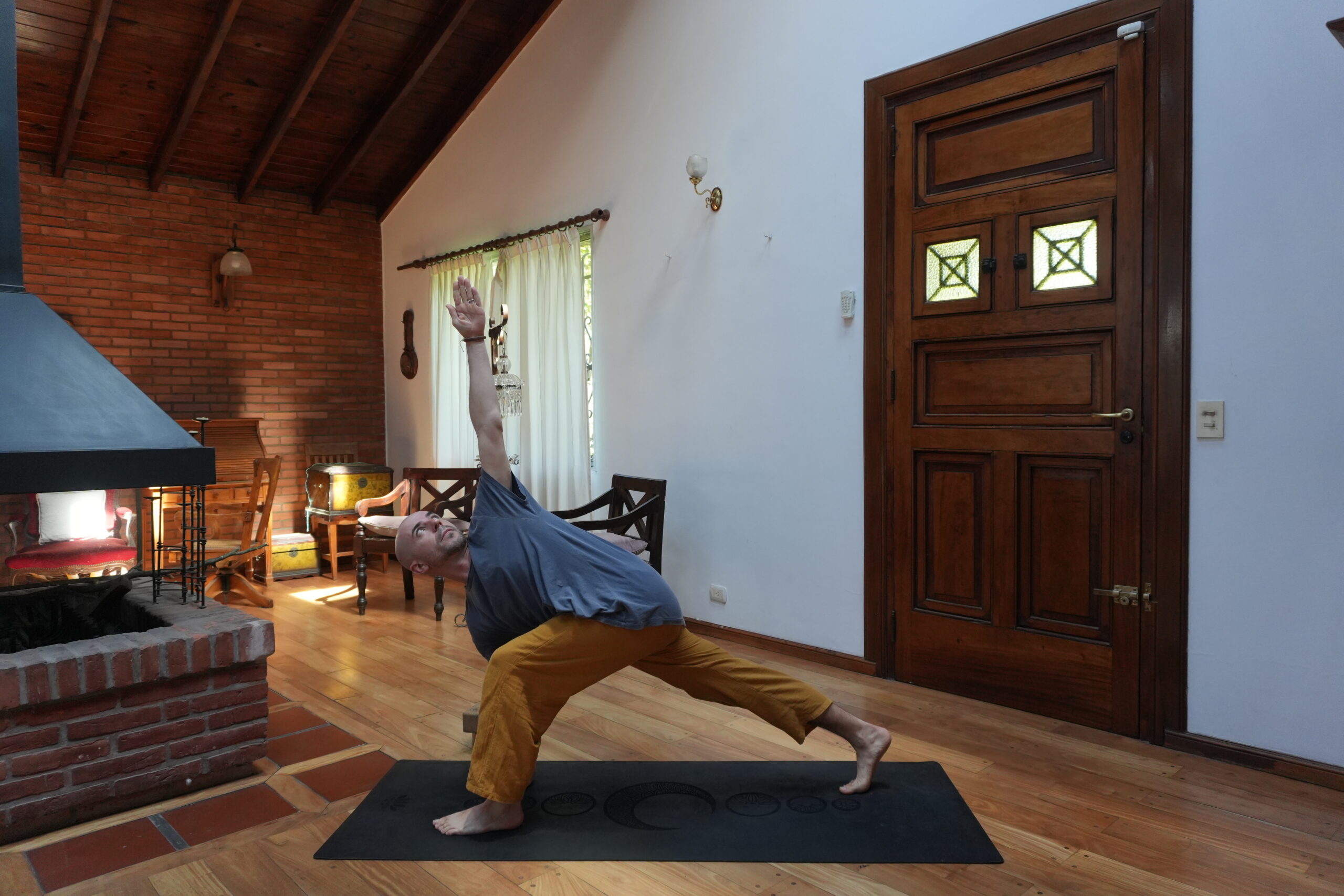
Hey there! I’m Steve! And through my teaching, I help people who rely on unhealthy coping mechanisms and often feel stressed, overwhelmed, or disconnected from themselves. Using yoga, philosophy, and mindfulness, I guide them to slow down and regulate their nervous system naturally. If this resonates with you, you’re welcome to follow me on social media for gentle guidance, support, and practical tools to bring more calm and balance into your day.
Table of contents
- Move from fight-or-flight to rest-and-digest with slow, intentional movement
- When Stress Becomes the Default State
- The Nervous System Has Another Mode
- Movement Can Rewire Stress Patterns
- The Hidden Power of Slow Movement
- Consistency Matters More Than Intensity
- Signs Your Nervous System Is Shifting
- Learning to Feel Calm Again
- 7-Day of Movement For Chronic Stress Recovery
- Gentle Note Before You Go
Move from fight-or-flight to rest-and-digest with slow, intentional movement
There is a moment many busy professionals recognize.
You close the laptop after a long day.
The emails stop.
The meeting notifications disappear.
But your body doesn’t get the memo.
Your shoulders are still tight.
The jaw is slightly clenched.
Your mind jumps from one unfinished thought to the next.
Even when you finally sit on the couch, your nervous system is still acting like something urgent is about to happen.
This is what chronic stress looks like in the body.
The problem is not simply that we experience stress. Stress is a natural part of life. The real issue is that the body learns stress as a pattern. When that pattern repeats every day, the nervous system begins to assume that constant alertness is normal.
Over time, the body starts living in fight-or-flight mode, even when nothing dangerous is happening.
The good news is that this pattern is not permanent.
Your nervous system is incredibly adaptable.
And one of the most powerful ways to retrain it is through slow, intentional movement.
When Stress Becomes the Default State
Modern life trains us to move fast, compete, and pushing ourselves consistently.
Deadlines, notifications, multitasking, commuting, social obligations, endless information. The pace rarely slows down, unless we decide to give ourselves that precious time we need.
During the day, many people operate like this without even noticing:
- responding to messages instantly
- juggling multiple tasks
- pushing through fatigue
- drinking coffee to stay sharp
- checking the phone constantly
The nervous system interprets this environment as continuous demand, the brain is constantly giving and receiving information.
When the body receives signals of urgency over and over again, it adapts. Muscles remain slightly contracted. Breathing becomes shallow. The mind scans for the next problem to solve.
This state is known as sympathetic activation, often called the fight-or-flight-or freeze response.
It is useful when we need it.
But when it becomes constant, the body forgets how to shift out of it.
That is why many people feel wired even when they finally try to relax.
Their nervous system simply hasn’t practiced slowing down for long.
The Nervous System Has Another Mode
There is another side of the nervous system that often gets neglected.
It is called the parasympathetic state, sometimes described as rest-and-digest. This is key to stay balance in life!
In this state:
- breathing slows
- muscles soften
- digestion improves
- the mind becomes clearer
- the body begins to repair itself
It is the state where real recovery happens.
But the body does not switch into this mode automatically.
It needs signals of safety.
And one of the most direct ways to send that signal is through the body itself.
Movement Can Rewire Stress Patterns
When people think about exercise, they often imagine intense workouts or pushing the body to its limits.
That kind of training has its place and time. But when the nervous system is already overloaded, intensity can sometimes add more stimulation.
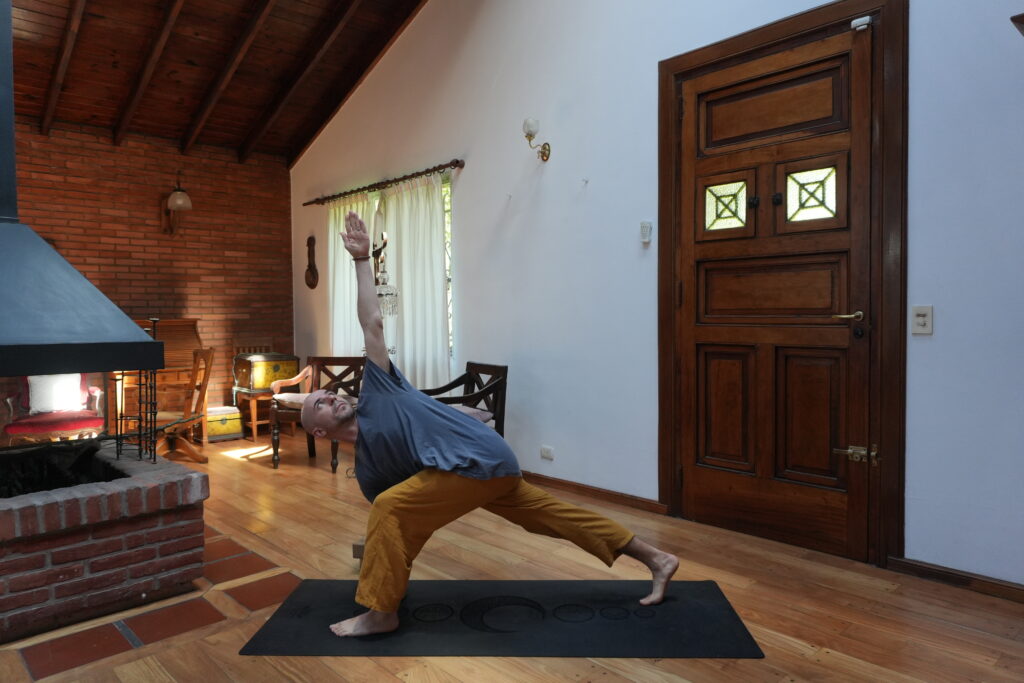
Slow movement works differently.
When you move gently and intentionally, several things happen at once.
Your breath begins to deepen.
Tension in the muscles gradually releases.
The brain receives sensory signals that the body is not under threat.
This is important because the nervous system listens more closely to physical signals than to thoughts.
You can tell yourself to relax a hundred times, but if your shoulders are tight and your breath is shallow, the body will not believe it.
Movement changes the message.
When the body softens, the mind often follows. And when the mind softens it become easier to take good decision and find clarity in general in life.
The Hidden Power of Slow Movement
There is something surprisingly powerful about moving slowly.
When we slow down a stretch, pause between movements, and allow the breath to guide the body, the nervous system starts shifting gears.
The heart rate decreases.
The breath lengthens.
Muscles release the subtle gripping they have been holding all day.
At first, this can feel strange.
If you are used to constant stimulation, stillness might even feel uncomfortable, or boring! Many people notice that when they slow down, their mind suddenly becomes louder. The mind search for distraction!
It is completely normal.
This simply means the body is entering a space it has not visited in a while.
With repetition, that space becomes more familiar.
Consistency Matters More Than Intensity
Rewiring the nervous system does not require long sessions or dramatic routines.
In fact, the nervous system responds best to something much simpler: short practices done consistently.
Ten or fifteen minutes of slow movement each day can begin to create a new rhythm in the body.
Think of it as teaching the nervous system a new language.
Every time you move gently, breathe deeply, and pause, you repeat the same message:
It is safe to slow down.
Over time, the body starts remembering this state.
Signs Your Nervous System Is Shifting
The changes are often subtle at first.
You might notice:
- your breathing becomes deeper during the day, more relaxed
- your shoulders relax more easily
- you fall asleep faster, and don’t wake up in the middle of the night
- stressful moments feel slightly easier to handle with more awareness
These are small signals that the nervous system is learning something new.
And the more often you practice, the stronger those pathways become.
Learning to Feel Calm Again
One of the strange effects of chronic stress is that calm can initially feel unfamiliar.
If your body has been running on urgency for months or years, slowing down might feel unnatural at first.
But calm is not something reserved for quiet retreats or rare vacations.
It is a state your body already knows.
Sometimes it just needs to be reminded.
Every slow stretch, every deep breath, every moment you pause is a gentle message to your nervous system!
You can soften and breathe.
You can return to balance.
And often, the shift begins with something very simple.
Ten quiet minutes of mindful movement.
7-Day of Movement For Chronic Stress Recovery
Feeling like stress has been running the show lately?
If you’ve been moving from one thing to the next, relying on distractions just to get through the day, you’re not alone, and you don’t have to stay stuck in that cycle.
I’ve created a video series, 7-Day Stress Detox to help you slow down, reconnect, and feel more like yourself again.
In just 10–15 minutes a day, you’ll be guided through gentle yoga, simple breathwork, and grounding practices designed to release tension, calm your mind, and support you in building healthier coping habits, without overwhelm.
This is your space to pause, reset, and come back to what really matters.
Sign up below and start your journey toward feeling calmer, clearer, and more in control.
Gentle Note Before You Go
Your presence here is deeply appreciated.
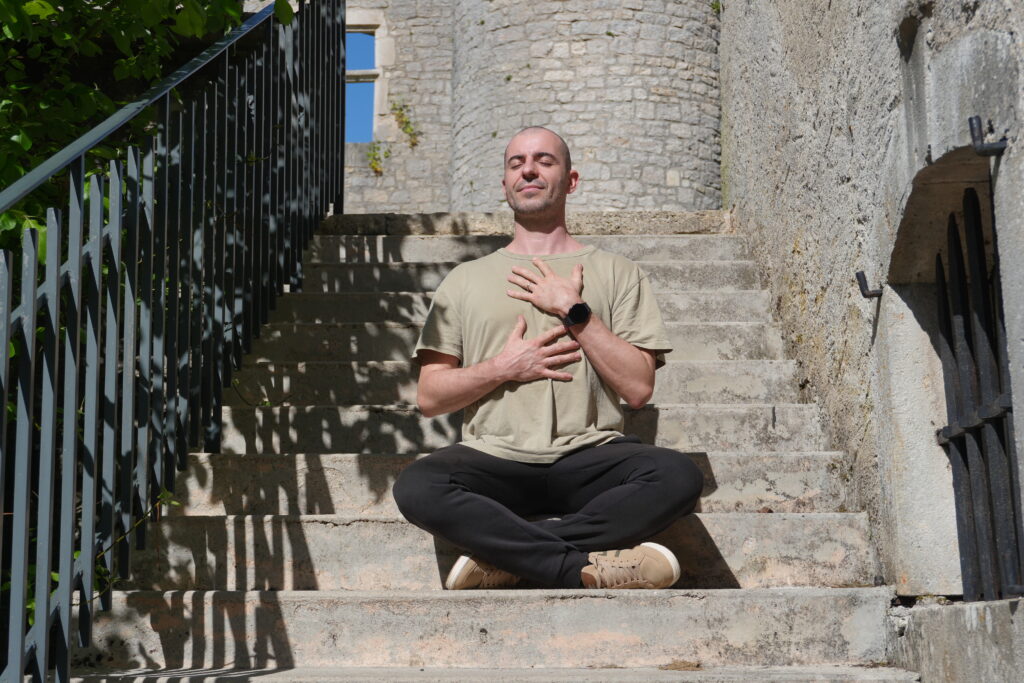
If this reflection resonated with you, I invite you to explore the additional resources shared below. You’re also warmly welcome to join my weekly newsletter, where I offer insights on Yoga for Professionals, mental well-being, and mindful living.
May your day unfold with a little more clarity, spaciousness, and ease.
With love,
Steve Bavoysi
Founder & CEO of Grounded_by_yoga
Come and join me on social media! Share! And thrive!

Calm on demand (video Library)
This video library is here to support you whenever you need to tune in. Whether you’re feeling overwhelmed, caught in stress cycles, or disconnected from yourself, these practices will help you reset your nervous system, release emotional heaviness, cultivate deep relaxation, and reconnect with your inner self. From Vinyasa to Gentle Hatha and Yin Yoga, you’ll find slow, intentional movement designed to release tension and soothe your nervous system. The library also includes breathwork and meditation practices—powerful tools to calm your mind and regulate emotions—along with short stress-relief sequences created for those moments when time is limited but stress is high. For deeper healing, there are longer sessions focused on emotional release, nervous system regulation, and deep rest. Everyone is welcome, no matter where you are on your journey. More than just movement, this library is about helping you step out of survival mode and into a life of clarity, ease, and empowerment.
Last updated Feb 15th, 2026