Īśvara Praṇidhāna in Yoga: Finding Freedom Through Surrender
Author: Steve Bavoysi
Yoga for Mental Health
Founder & CEO of Grounded_by_yoga
With my teaching I help people who rely on unhealthy coping mechanism, who feel stressed, overwhelmed, or disconnected from themselves.
Through yoga, philosophy, and mindfulness, I support them in slowing down and gaining clarity.
If you’re looking for simple tools to feel more balanced and grounded, follow me on social media for guidance and support.
Trusting What You Cannot Control
Yoga is not only about strengthening the body. At its heart, yoga is a path of inner freedom.
Within the Niyamas — the personal observances of yoga philosophy — we find Īśvara Praṇidhāna, the practice of surrender.
Many people translate it as devotion to a higher power. But in yoga, it also means releasing the illusion of control and softening into trust.
In classical yoga, Īśvara Praṇidhāna invited practitioners to recognize a presence greater than the individual ego — whether understood as:
- The divine
- Universal intelligence
- The natural order
- The wisdom of life itself
This wasn’t about religion. It was about humility, perspective, and letting go of the constant pressure to manage everything alone.
If you’re new to this framework, I recommend reading this post for you to get a bigger picture of the yogic principles:The Yamas & Niyamas: Ancient Wisdom for Modern Stress.
It offers helpful context for what follows.
Today, we’ll explore what Īśvara Praṇidhāna really means, why it matters for our mental health, and how to practice it in a grounded, accessible way.
What Is the Meaning of Īśvara Praṇidhāna?
The Sanskrit roots offer a clear picture:
- Īśvara — the higher Self, the divine, or the universal
- Praṇidhāna — surrender, dedication, or wholehearted offering
Together, they point to letting go of the ego’s tight grip and trusting the flow of life.
This doesn’t mean giving up. It means releasing the belief that you must control everything.
Īśvara Praṇidhāna helps us see:
- What is within our influence
- What is not
- Where we resist reality
- How attachment creates suffering
- Why acceptance brings peace
It is not passive. It is a courageous act of softening.
A willingness to stop fighting life and start cooperating with it.
Īśvara Praṇidhāna for Mental and Emotional Well-Being
Much of our stress comes from trying to control the uncontrollable.
We want certainty & guarantees. We want life to unfold according to our plans.
But life rarely works that way.
Īśvara Praṇidhāna creates space. It helps us loosen the internal pressure and breathe again.
Through this practice, we learn:
- Not every problem needs immediate fixing
- Not every emotion needs resisting
- Not every outcome is ours to manage
This shift can be deeply healing.
Īśvara Praṇidhāna supports mental health by cultivating:
- Acceptance instead of resistance
- Trust instead of fear
- Softness instead of tension
- Perspective instead of overwhelm
Rather than fighting discomfort, we learn to meet it with openness. Growth happens when we stop gripping and start listening.
Practicing Īśvara Praṇidhāna in Daily Life
This Niyama is not about blind faith. It is about learning to trust the unfolding of your life with honesty and humility.
Here are simple ways to practice it:
1. Pause Before Reacting
When something challenging happens, take a breath before responding. This moment of stillness interrupts the urge to control and invites clarity. Ask yourself: Is this mine to carry, or can I soften here?
2. Let Go of the Outcome
Do your best — then release the rest. You cannot control how others respond, how situations evolve, or how life rearranges itself. Your responsibility is your effort, not the result.
3. Practice Humility
Humility is not weakness. It is the recognition that you are part of something larger. This perspective reduces pressure and brings peace.
4. Create a Ritual of Surrender
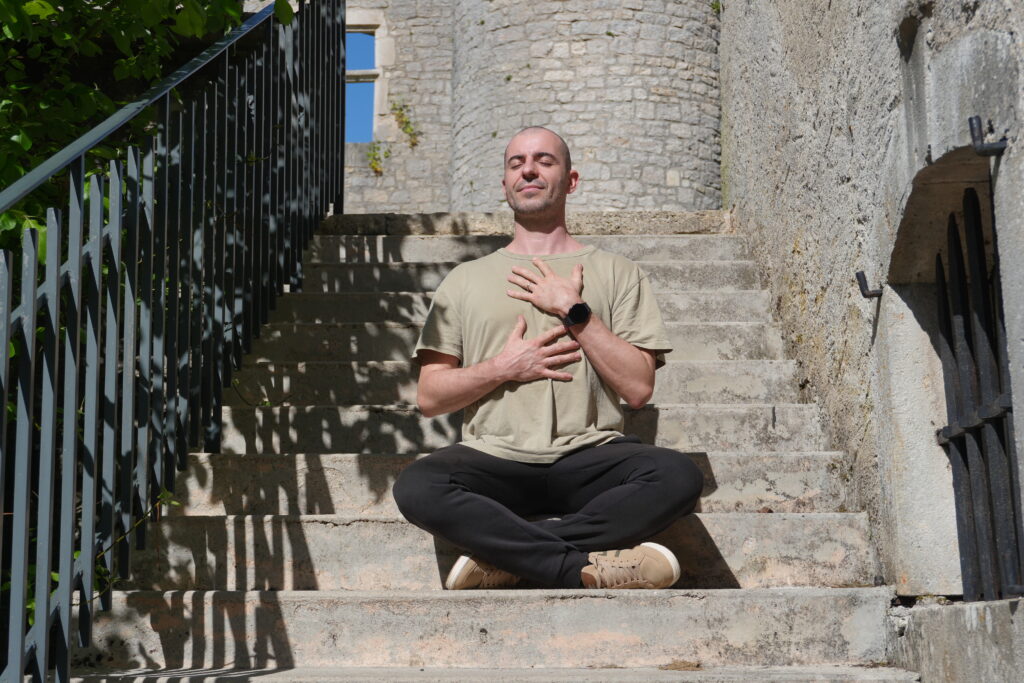
This could be a short prayer, a mantra, a breath practice, or simply placing your hand on your heart and saying: “I release what I cannot control.” Small rituals anchor the mind in trust.
5. Notice Where You Grip
Throughout the day, observe where you tighten — in your body, your expectations, your relationships. These moments reveal where surrender is needed most.
Īśvara Praṇidhāna is not about giving up. It is about giving over — handing your worries to something larger than your fear.
From Surrender to Inner Freedom
So, what does Īśvara Praṇidhāna truly mean?
It is the practice of releasing the ego’s constant striving. Of trusting the wisdom of life. Of softening into what is already here.
It reminds us that peace does not come from controlling everything. It comes from aligning with the natural flow of life.
As this understanding deepens:
- Anxiety loosens its grip
- The mind becomes quieter
- Emotional storms pass more quickly
- Life feels less like a battle and more like a partnership
Īśvara Praṇidhāna doesn’t ask you to abandon your strength. It invites you to stop carrying what was never yours to hold.
And when you surrender with sincerity, clarity and calm arise naturally.
“Surrender is not defeat. It is the quiet courage to trust the unfolding of your life.”
Receive Weekly Free Guidance
If these reflections on the Svādhyāya spoke to your heart, I’d love for you to join my weekly newsletter, a mindful space designed to support your emotional and mental well-being.
Each week, you’ll receive:
-Simple yoga and mindfulness practices
-Reflections on emotional balance and self-awareness
-Tools to manage stress and live with greater presence
Your journey toward calm doesn’t have to be walked alone.
Let’s breathe, grow, and heal together; as we live the wisdom of the Yamas and Niyamas in everyday life.
I’d love to hear from you!
Let me know in the comment below if you have any questions about starting your yoga journey, need help choosing a practice, or just want to share how yoga has been supporting your well-being, I’m here to support you. And if you’re curious to keep exploring, you’ll find more posts linked below with simple, grounding practices and tips to help you relieve stress and reconnect with yourself.
With care,
Steve Bavoysi
Founder and CEO of Grounded_by_yoga
Come and join me on social media! Share! And thrive!