
Author: Steve Bavoysi
Yoga for Nervous system & Resilience
Founder & CEO of Grounded_by_yoga

Breathe Your Way Out of Stress: The 4-7-8 Technique
We’ve all been there, stuck in “always-on” mode, keeping ourselves constantly busy to avoid difficult feelings or trying to meet the relentless expectations of modern productivity. One effective approach to managing stress and anxiety, especially in this fast-paced world, includes learning a simple breathing technique, such as the 4 7 8 breathing technique. These days, stress and anxiety feel almost unavoidable, especially for busy professionals living in big cities, juggling tight schedules, personal responsibilities, and the nonstop buzz of digital life.
While you can’t eliminate stress entirely (and to be fair, stress isn’t all bad, it has a purpose), what’s harmful is getting stuck in it. The good news? There are simple, effective ways to help your body shift out of stress mode and into a calmer, more grounded state, and it only takes a few minutes.
One of the easiest and most powerful tools is the 4-7-8 breathing technique, a gentle breath pattern that slows your heart rate, calms the mind, and supports your nervous system in returning to balance.

In this post, you’ll learn what the 4-7-8 technique is, why it’s so effective for managing stress and anxiety (yes, even during a hectic workday), and exactly how to practice it — even if you’re brand new to breathwork.
What is the 4-7-8 Breathing Technique, and Why Does It Matter?
The 4-7-8 breathing technique is a simple but powerful breathing pattern popularized by Dr. Andrew Weil, based on ancient yogic practices. It involves:
- Inhaling for 4 seconds
- Holding the breath for 7 seconds
- Exhaling for 8 seconds
This technique slows your breathing, increases oxygen flow, and activates the parasympathetic nervous system — the part of your nervous system responsible for rest and relaxation. It’s often referred to as a “natural tranquilizer” for the nervous system and can be especially helpful if you:
- Struggle to fall asleep
- Feel overwhelmed or anxious
- Experience racing thoughts or physical tension
By practicing regularly, you can train your body to respond to stress more calmly and mindfully.
How to Reduce stress and anxiety
Follow these steps to get started with the 4-7-8 breathing method:
Step 1: Find a Comfortable Position
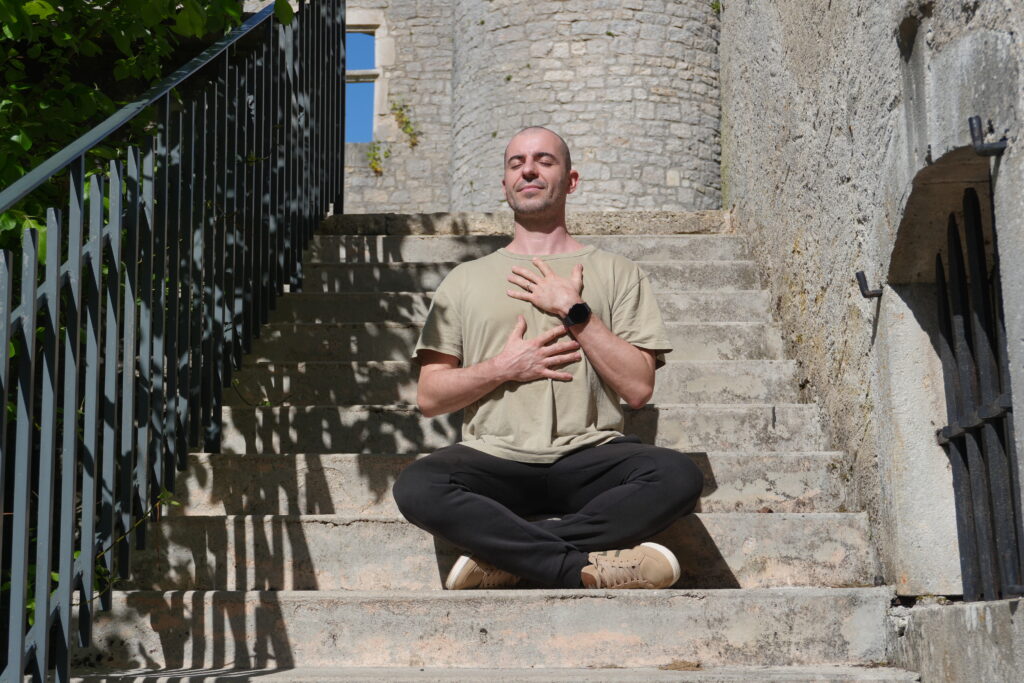
Sit or lie down in a quiet place where you won’t be disturbed. Keep your spine straight if seated, and allow your shoulders to relax away from your ears. You can close your eyes or soften your gaze to reduce distractions.
Step 2: Place the Tip of Your Tongue Behind Your Upper Front Teeth
This is a traditional part of the technique. Keep your tongue gently resting here throughout the practice — even during the exhale.
Step 3: Exhale Completely Through Your Mouth
Make a gentle whooshing sound as you exhale through your mouth. This helps clear out stale air and sets the tone for the practice.
Step 4: Inhale Through Your Nose for 4 Seconds
Close your mouth and inhale quietly through your nose to a mental count of four.
Step 5: Hold Your Breath for 7 Seconds
Keep your body relaxed while gently holding your breath for a count of seven. This is the most crucial part — it allows oxygen to saturate your bloodstream and begins to calm your system.
Step 6: Exhale Slowly Through Your Mouth for 8 Seconds
Exhale through your mouth with a gentle whooshing sound for a full count of eight. Let the breath go slowly and evenly, releasing any tension.
Step 7: Repeat the Cycle
Repeat the cycle for a total of 5 full breaths to start with. And with practice, you can gradually increase to 10 breath cycles once or twice a day as a simple yet powerful way to support ongoing nervous system regulation and maintenance, and it can be done anywhere, at anytime.
Tips and Reminders for Practicing 4-7-8 Breathing technique
- Start small: If holding your breath for 7 seconds feels challenging at first, reduce the ratio slightly (e.g., 3-5-6) and build up gradually.
- Use it before bed: This technique is especially effective for winding down at night. Try it tonight lying in bed to help you fall asleep faster.
- Stay consistent: For best results, practice twice a day, morning for example before sipping your first coffee and evening before falling asleep.
- Don’t force your breath: Keep your breathing smooth and comfortable. Straining can increase anxiety rather than reduce it.
- Be patient: The effects can be subtle at first, but regular practice creates noticeable calm over time.
Conclusion for today
The 4-7-8 breathing technique is one of the simplest tools you can add to your daily routine to manage stress, to reduce anxiety, improve sleep, and find a greater sense of inner peace. Whether you’re preparing for a stressful meeting, trying to fall asleep, or just need a moment of calm, this practice is a powerful reminder that peace is only a few breaths away.
I’d love to hear from you! Let me know in the comment below if you have any questions about starting your yoga journey, need help choosing a practice, or just want to share how yoga has been supporting your well-being—I’m here to here what you have to say.
Take care,
Steve Bavoysi
Founder & CEO of Grounded_by_yoga
Come and join me on social media! Share! And thrive!