Author: Steve Bavoysi
Yoga for Mental Health
Founder & CEO of Grounded_by_yoga
I explore the art of letting go in my teachings, guiding individuals through the process of releasing stress and embracing mindfulness. So if you are looking for clarity in life, come and join me on social media! And receive insights and educational content for you to thrive in life!
Letting Go with Aparigraha: Finding Calm Beyond Control
Have you ever felt like no matter how much you achieve or acquire, peace still feels out of reach?
We live in a world that constantly tells us to hold on, collect more, do more, be more. But the truth is, peace often begins when we learn how to let go.
This is where Aparigraha, one of yoga’s ethical principles (the Yamas), becomes a powerful guide. It teaches us the art of letting go; not just of physical possessions, but of mental and emotional attachments that weigh us down.
If you’re new to the Yamas and Niyamas, before we start, I recommend reading my post The Yamas & Niyamas: Ancient Wisdom for Modern Stress to understand the broader context of these timeless teachings.
Understanding Aparigraha: The Yoga of Non-Hoarding
In Sanskrit, Aparigraha means non-hoarding or non-greed. It’s the practice of living with awareness, gratitude, and simplicity.
More than just a philosophy, it’s a way of life that invites us to release our grip on things, people, and even outcomes.
When we cling, whether to control, expectations, or possessions; we trap ourselves in a constant state of tension. The mind begins to spin stories of “what if” and “what next,” making it difficult to be present. The tighter we hold on, the more life feels like something we have to manage instead of something we can experience and enjoy.
Aparigraha, the art of letting go, invites us to release that grip. It’s not about abandoning our goals or detaching from people we love, but it’s about loosening the need to control outcomes. When we learn how to let go, we begin to see that peace doesn’t come from holding on; it comes from trusting that what’s meant for us will stay, and what’s not will gently fall away.
This practice of non-hoarding and non-greed teaches that true freedom lies in presence, not possession. The more we accumulate, things, titles, expectations; the heavier we feel. Letting go allows us to move through life lightly, with space to breathe, grow, and receive new experiences with gratitude.
When we practice Aparigraha, we start to understand that nothing truly belongs to us, not our achievements, not our relationships, not even our thoughts. Everything is borrowed, passing through our lives like waves. The art of letting go is learning to stand in that flow, open and unafraid, knowing that what we release makes room for something even more meaningful to enter.
In that space of release, life becomes softer. We stop fighting for control and start living in alignment, with trust, gratitude, and ease.
Why the Art of Letting Go Matters for Mental Health
Learning how to let go isn’t about indifference, but about emotional freedom.
Clinging and greed create constant worry: “What if I lose this? What if it’s not enough?” That cycle fuels stress, anxiety, and ultimately burnout.
Aparigraha offers a path out of that loop.
When we release the need to control or possess, our nervous system relaxes. We begin to breathe easier, think clearer, and act with intention instead of fear.
Modern psychology agrees: gratitude, mindfulness, and minimalism all reduce anxiety and increase happiness. Aparigraha simply gives this truth a spiritual root. It’s not about having less, it’s about needing less to feel whole.
How to Let Go: Practicing Aparigraha in Daily Life
You don’t need a yoga mat or a meditation cushion to live Aparigraha.
Letting go is not something that happens only on a mat, it’s something that unfolds in everyday life, through small, conscious choices.
Here are five ways to practice the art of letting go daily and make Aparigraha a living experience, not just a concept.
1. Declutter Your Space, Clear Your Mind
Your environment reflects your inner world. When your home or workspace is filled with things you no longer use or love, that clutter holds stagnant energy.
Start small, one drawer, one shelf, one corner. As you release physical objects, notice how your body and mind respond. You may feel lighter, calmer, and more at ease. This is the art of letting go in action, creating space not only around you but also within you.
2. Notice Your Attachments
Letting go isn’t always about objects; often, it’s about invisible attachments.
Ask yourself: What am I afraid to lose? It might be an identity, a belief, a relationship, or even someone’s approval.
Aparigraha invites us to look honestly at what we cling to and why. Awareness is the first step toward freedom. When you notice attachment without judgment, you create the space to release it gently, instead of forcing change.
3. Practice Gratitude
Gratitude is one of the simplest ways to embody Aparigraha. When we focus on what we already have, we stop chasing what we think is missing, creating peace of mind.
Each moment of appreciation, whether for a warm cup of tea, a kind smile, or your breath; reminds you that abundance already surrounds you. Gratitude softens greed and turns the art of letting go into an act of trust. You begin to see that you don’t need more to feel whole, you need presence.
4. Release Control
One of the hardest lessons in how to let go is accepting that we cannot control everything.
Life rarely unfolds the way we expect, yet it often unfolds exactly as it should. Aparigraha teaches us to surrender to that flow, to release our tight grip on outcomes.
When you stop forcing and start allowing, you make space for grace. In that surrender, peace finds you.
5. Give Freely
Generosity is the heart of Aparigraha. When you share, your time, your attention, your kindness; you dissolve the illusion of lack. Giving reminds you that life expands through openness, not possession.
Each act of generosity reinforces the truth that letting go is not losing, it’s creating space for more joy, connection, and abundance to flow through you.
Living Aparigraha is a daily practice of awareness and trust. Every moment you choose to release rather than grasp, you strengthen your connection to the present.
That is the art of letting go is a dance between surrender and grace, between holding with love and releasing with faith.
The Spiritual Side of Letting Go
In yoga philosophy, Aparigraha helps us reconnect with our true essence.
When we stop defining ourselves by what we own, achieve, or control, we rediscover who we really are; peaceful, grounded, and enough.
Letting go is not about losing; it’s about returning. It’s about remembering that contentment doesn’t come from what we hold, but from what we release.
Each time we practice the art of letting go, we make room for something deeper: self-trust, gratitude, and presence.
Living with Aparigraha: A Daily Reminder
When you choose to play artound with this principle of Aparigraha, you begin to notice subtle shifts; your mind feels lighter, your reactions softer, and your relationships calmer.
You stop rushing to fill the silence and start feeling at home in simplicity.
This is the freedom that lies in how to let go: learning to live with enough, to breathe with ease, and to receive each moment, good or bad, as it comes.
Aparigraha reminds us that peace isn’t found in holding on, but it’s found in the space we create when we release.
Start Practicing the Art of Letting Go Today
If the wisdom of Aparigraha resonates with you, take the next step toward inner balance with my free 3-day video series, “The Calm Within.”
Through short, mindful practices, you’ll learn to slow down, reconnect, and find peace that comes from letting go.
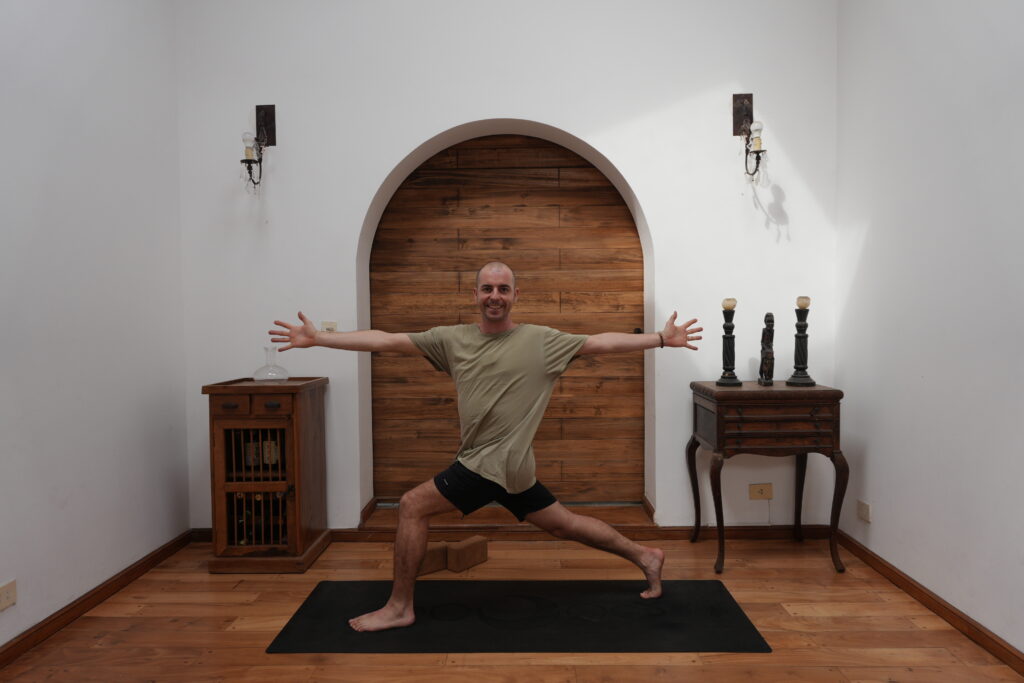
Thank you for taking a moment to slow down and reflect.
If this post spoke to you, follow me on social media @Grounded_by_yoga for weekly practices, insights, and tools to support your emotional well-being.
You’re welcome to explore more of my articles below for inspiration and support on your journey toward calm and balance. If this reflection resonated, I’d be honored to share more through my weekly newsletter; gentle reminders, simple practices, and soulful guidance delivered with care.
May you continue to breathe deeply, move gently, and remember, you’re part of a mindful community that cares.
With warmth,
Steve Bavoysi
Founder & CEO of Grounded_by_yoga
Come and join me on social media! Share! And thrive!

Find your Calm: The Path to Serenity
In this 10-day yoga program, you will dive deep into the ancient wisdom of the yamas and niyamas — the ethical and moral foundations of yoga — and discover how they can be powerful tools for managing stress and anxiety in your daily life. Through these lessons, you will explore each of the five yamas (non-harming, truthfulness, non-stealing, moderation, and non-possessiveness) and five niyamas (purity, contentment, self-discipline, self-study, and surrender) in a way that is practical, relatable, and applicable to modern life. Each session will combine gentle yoga practices, guided meditations, and reflective exercises, allowing you to experience the calming effects of these principles physically, mentally, and emotionally. By understanding and reflecting on these core tenets, you will cultivate greater self-awareness and compassion, leading to a deeper sense of inner peace and balance.
Last updated Feb 15th, 2026