Feeling the Weight of Stress? Your Breath Might Be the Key
We’ve all been there, sitting at our desk, feeling our heart race, our shoulders tighten, and our mind spin with a to-do list that never seems to end. Engaging in a breathing exercise for stress relief can help manage these overwhelming feelings. Maybe your stress shows up as irritability, maybe as tension in your jaw, or maybe as that foggy-headed feeling that makes it impossible to focus.

In moments like these, we often look for something external to calm us, a cup of coffee, a scroll through social media, maybe even a glass of wine later. But one of the most powerful tools for stress relief is already built into your body: your breath.
In this post, we’ll define what a breathing exercise for stress relief actually is, explore why it’s so powerful, and share simple ways you can use it to feel more grounded, anytime, anywhere.
What Is a Breathing Exercise for Stress Relief?
A breathing exercise for stress relief is a deliberate practice of controlling your breath, slowing it down, deepening it, or guiding it in a specific rhythm, to calm your mind and relax your body.
Unlike your usual unconscious breathing, this kind of breathwork is intentional. You shift from automatic, shallow breathing (which often happens when we’re stressed) to a slower, fuller breath that signals safety to your nervous system.
Why Is a Breathing Exercise for Stress Relief Important?
Stress isn’t just “in your head”, it’s a full-body experience. When you’re under pressure, your body flips into fight-or-flight mode. Your heart beats faster, your muscles tense, and your breathing becomes quick and shallow.
Here’s the problem: most of us stay in that state far longer than our bodies are designed for. Over time, that constant stress can impact your focus, sleep, digestion, and even your mood.
Breathing exercises work because they flip the switch. Slow, steady breathing activates the parasympathetic nervous system—the “rest and digest” state—helping your body relax, your mind clear, and your emotions soften.
A Harvard study found that deep breathing can reduce cortisol levels (your main stress hormone) and improve emotional regulation. And the best part? It works in minutes, requires no special equipment, and you can do it anywhere, from your office chair to your car before a meeting.
Examples of Breathing Exercises for Stress Relief
Here are three you can try today:
- Box Breathing: Inhale for 4 counts, hold for 4, exhale for 4, hold for 4. Repeat for 4–6 rounds. This is great for slowing your mind when you feel overwhelmed.
- Nadi Shodhana (Alternate Nostril Breathing) Gently close your right nostril, inhale through the left, close the left nostril, exhale through the right. Repeat, switching sides. This balances your energy and helps you feel centered.
- 4-7-8 Breath Inhale through your nose for 4 counts, hold for 7, exhale through your mouth for 8. This is especially powerful for calming anxiety and winding down before bed.
Tips for Getting the Most Out of Your Breathing Practice
- Start small. Keep it simple, even two minutes of focused breathing can make a difference, don’t wait until you have “enough time” to begin.
- Pair it with a cue. Try your breathing exercise after pouring your morning coffee, before opening your laptop, before starting the car in the morning or as soon as you close your eyes at night, few cycles of mindful breathing is better than nothing.
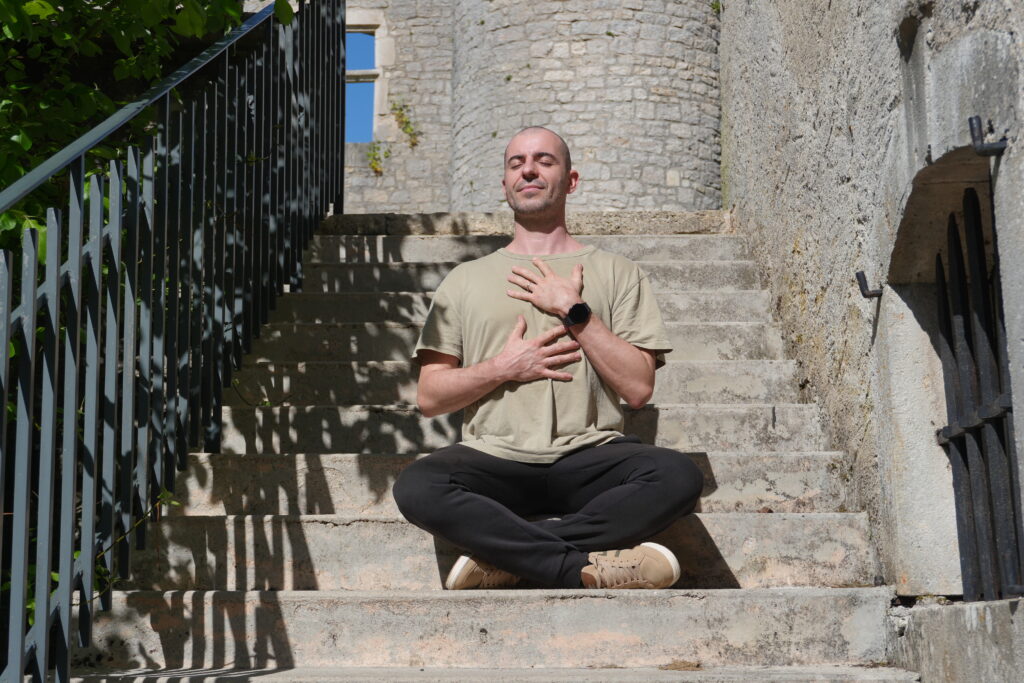
- Make it sensory. Close your eyes if that’s comfortable, place your hands on your belly, and really feel each inhale and exhale, this practice will help you be with your body increasing the feelings of presence.
- Stay gentle. If you feel lightheaded, shorten your breath counts or return to your normal breathing until you feel ready to try again. Remember each day is different, be kind with yourself, there are no competition.
My last words for today
Your breath is more than just a life function, it’s your built-in stress relief tool that you can tap in at anytime and anywhere. By practicing intentional breathing, you can shift from tension to ease, from racing thoughts to clarity, and from overwhelm to presence.
It’s simple, it’s free, and it’s always with you. The next time stress creeps in, switch on your awareness, pause. Inhale slowly, exhale fully, and let your breath bring you back to yourself.
If you want to learn more about chronic stress and the impact it has on your body click the link below to read this article:
How Chronic Stress Impact You From Head to Gut?
Thanks for being here and giving yourself a moment to slow down.
I hope something in these words helped you exhale or feel a little more understood.
Your presence in this space is deeply appreciated.
With care,
Steve Bavoysi
Founder of Grounded_by_yoga
Come and join me on social media! Share! And thrive!