Author: Steve Bavoysi
Founder and CEO of Grounded_by_yoga
Come and join me on social media! Share! And thrive!
Viparita Karani: The Simple Yoga Pose For Stress and Anxiety
If you’ve ever ended a long day with tight shoulders, a stiff back, and a restless mind, you know how deeply stress can settle into both body and mind. Yep, Stress isn’t just living in our mind! Practicing a yoga pose for stress and anxiety can be a more effective approach than the quick fixes we often reach for, scrolling, snacking, opening a bottle of wine or collapsing on the couch, which rarely provide the true rest our nervous system needs. What it needs is stillness and connection with the Self!
That’s where Viparita Karani, also known as Legs-Up-the-Wall Pose, comes in. This simple yet powerful restorative yoga posture has been practiced for centuries to calm the mind, ease physical tension, and bring balance to the body.
In this post, you’ll learn what this pose is all about, why it’s so effective for stress relief, and exactly how to put your legs up the wall step by step in a safe way.
What is Viparita Karani, and Why Does it Matter?
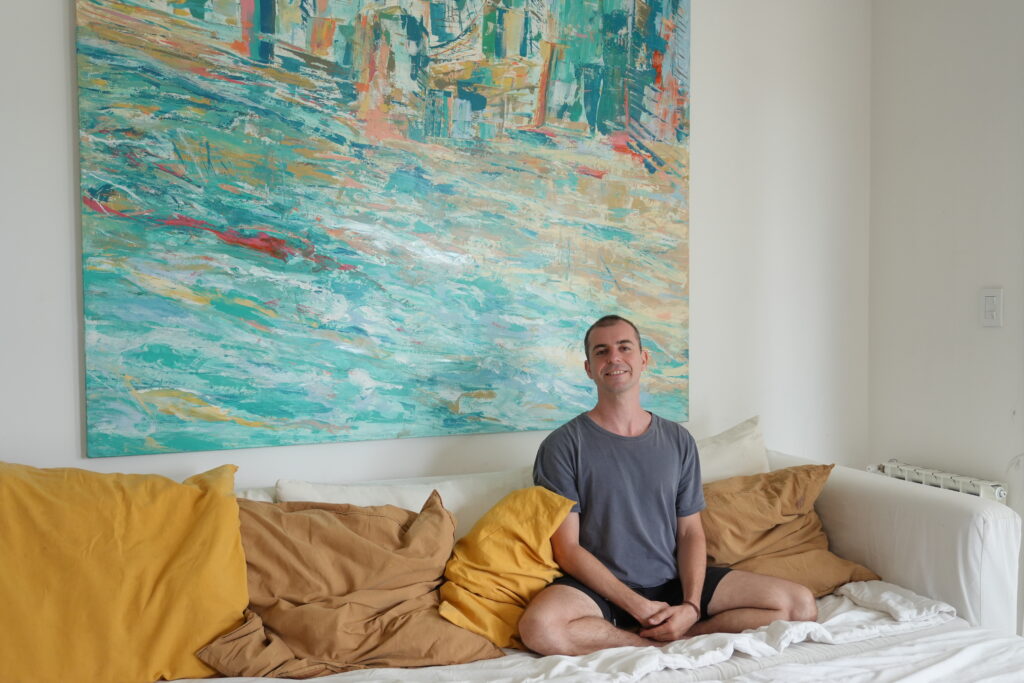
Viparita Karani is a restorative yoga pose where you lie on your back with your legs elevated vertically against a wall to listen and feel your breath. At first glance, it may seem almost too simple, but its effects are profound, especially as the ideal yoga pose for managing stress and anxiety. But be mindful that we are all different, Yoga is for everyone but not all Yoga is for everyone!
By inverting the legs and allowing gravity to assist circulation, this posture relieves physical fatigue while also activating the parasympathetic nervous system (the body’s “rest and digest” state). This is key for stress relief, because when we’re stressed, our body gets stuck in fight-or-flight mode, keeping the nervous system on high alert, and draining our energy out.
Benefits of Viparita Karani include:
- Calms the mind and reduces anxiety
- Relieves tired legs and feet
- Soothes lower back tension
- Improves circulation and lymphatic drainage
- Supports deeper rest and sleep
How to do legs up the wall pose step by step
Step 1: Set Up Your Space
Find a quiet spot near a wall. Lay down a yoga mat or blanket for comfort. If you like, keep a folded blanket or pillow nearby for hip support to enhance this yoga pose’s effects on stress and anxiety.
Step 2: Position Your Body
Sit sideways with one hip touching the wall. Gently swing your legs up as you lower your back to the floor, until your legs are resting against the wall.
Step 3: Adjust for Comfort
Your hips can be a few inches from the wall (or closer if that feels good). Rest your arms out to the sides, palms facing up. Place a pillow under your head if needed. And if you are craving extra release, bring your arms to a cactus shape or arms over head grabbing the opposite elbow to open up the chest.
Step 4: Focus on Your Breath
Close your eyes and begin to slow your breathing. Inhale through the nose, exhale gently through the nose or mouth, helping to ease anxiety with this calming yoga pose.
Step 5: Stay and Rest
Remain here for 5–15 minutes. If your legs become tired, bend your knees and rest your feet on the wall. When you’re ready to come out, gently roll to one side before sitting up slowly.
Join me on my YouTube channel and let my voice guide you through the practice.
Make This Pose Work for You: Key Tips
- Consistency matters: Practicing even for 5–10 minutes daily can make a big difference in reducing stress.
- Use props: If your lower back feels tight, place a folded blanket under your hips for gentle support.
- Time it well: Evening practice helps release the stress of the day and supports better sleep.
- Listen to your body: If your legs tingle or feel uncomfortable, bend your knees and take breaks as needed.
The Takeaway: Relax, Restore, and Reset with Viparita Karani
Stress relief doesn’t always require an hour-long yoga practice. Sometimes, the simplest postures, like Viparita Karani, offer the greatest reset. By gently inverting the body, calming the nervous system, and creating stillness, you allow both body and mind to soften. This yoga pose can significantly aid stress and anxiety management overtime, so do be shy to practice it regularly.
Next time you feel anxious, restless, or physically tense, try this posture. It might just become your go-to practice for instant calm.
Bring More Calm Into Your Life
If you’re ready to bring more calm and clarity into your daily routine, I’ve created a free resource: “Your Mind Needs a Break” – 3 Guided Meditations to Help You Breathe, Focus & Reset.
You can access it here: Click Here To Learn More
Thank you for taking the time to read this article! I hope it brought you a moment of calm and inspiration to try Viparita Karani or simply pause and reconnect with yourself. Your time and attention mean a lot, and I’m grateful to share these stress-relief tools with you.
With Care,
Steve Bavoysi
Founder and CEO of Grounded_by_yoga
Come and join me on social media! Share! And thrive!
If you found this article helpful, check out the links below for more resources, tips, and guided practices to support your stress relief, mindfulness, and overall well-being. Each one is designed to help you pause, reset, and bring calm into your day.